The Disastrous Cost of Apathy, Burnout, and Complacency
The Decades - Long Edge | Part 2 of 3
This is where the slide begins.
Not with failure. Not with a lack of talent. But with subtle shifts that go unnoticed, until the results show up and demand your attention.
Part 2 breaks down why smart, experienced, capable people stop growing. And what it quietly costs them.
Why Do People Stop Growing?
Three obstacles. Different causes. Same outcome: decline.
Apathy — You stop caring
Burnout — You stop pushing
Complacency — You stop improving
Let’s take them one at a time.
1. Confront Apathy with Planned Growth
Apathy is emotional disengagement — a lack of interest, concern, or motivation.
“I don’t care.”
“It doesn’t matter.”
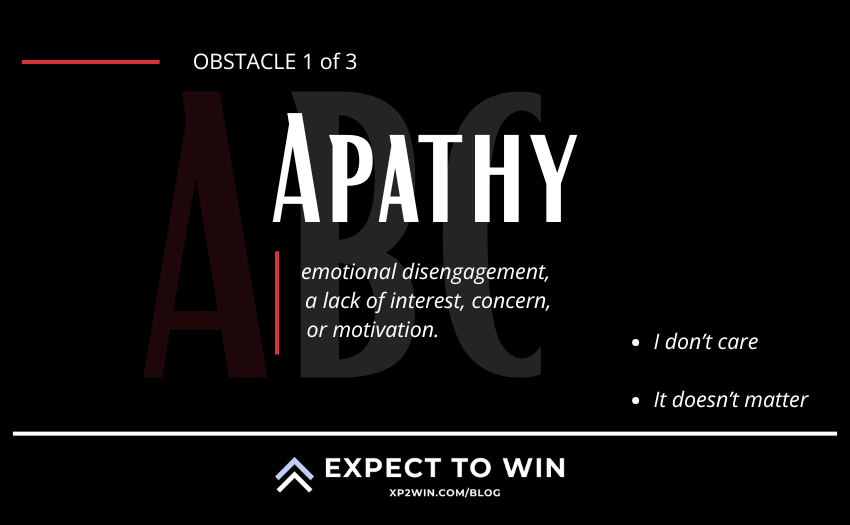
Part 2 of 3 - The ABCs of Going Backwards
It shows up as minimal effort, low energy, and zero urgency to improve. The person stops learning, avoids challenge, does the bare minimum, and sees no reason to change.
Apathy does not crash performance overnight. It slowly drains it.
John Maxwell’s The 15 Invaluable Laws of Growth teaches the Law of Intentionality, growth does not happen by accident. Apathy thrives in unstructured time. Growth requires structure. Apathy is passive. Growth is active.
The move:
Schedule growth like a revenue-producing activity
Set one quarterly skill target tied to real results
Build a weekly development block and protect it
Seek structured, honest feedback, not just validation
If growth is not on your calendar, decline is.
2. Be Honest About What Burnout Actually Is
Burnout is not just being tired.
It is when the drive to get better fades. When curiosity drops. When effort feels forced. When improvement stops feeling worth it.
You are not just fatigued, you are stalled.
It shows up as loss of motivation, negative thinking, reduced focus, and emotional exhaustion. And here is what most people miss: burnout is often misunderstood as something that simply happens to you.
In many performance contexts, it builds when purpose fades, when growth stops being a priority, and when energy runs out without being replenished.
Important distinction: Clinical depression and severe mental fatigue are real and require professional care. But burnout as a performance issue is often a signal, not a sentence, and it can be addressed with the right reset.
The move:
Start with the right questions.
Why do I do what I do?
How much does it still matter to me?
What would re-engaging with purpose actually look like?
Performance is anchored in purpose. When purpose is clear, energy follows. When energy follows, growth becomes possible again.
3. Attack Complacency with Intention
Complacency is satisfaction with your current level of performance, even when improvement is still needed and possible.
“I’m good enough.”
“I’ve been doing this for years.”
It rarely feels like failure. It feels like comfort. It feels earned. It feels justified.
That is exactly what makes it dangerous.
Maxwell’s growth principles make clear that success can quietly create complacency when intentional growth stops. James Clear reinforces that small declines compound just like small improvements do — in the wrong direction.
Complacency often begins with a single shift in identity:
From “I am a learner” to “I already know.”
That shift, subtle as it sounds, is where the drift begins. And drift, left unchecked, becomes decline.
The move:
Commit to doing your best in all that you do. Not occasionally. Not when it is convenient. Not only when someone is watching.
Make excellence your personal standard, as a leader, as a professional, as a spouse, as a parent, as a teammate.
That is not a call to perfection. It is a refusal to settle. It is choosing growth over comfort and keeping the long view in front of you.
There is no place for complacency in a life committed to becoming better.
The Bottom Line
No matter what your age or how long you’ve been doing it. No one wakes up and decides to decline.
It happens slowly. A little apathy. A little exhaustion. A little comfort. And over time, the edge dulls.
You are either sharpening your skills or allowing them to rust. There is no neutral gear in leadership or performance, only momentum moving in one direction or the other.
Apathy, burnout, and complacency do not usually announce themselves. They show up quietly, then gradually pull you away from growth, from progress, and from the best version of yourself.
If you want to keep climbing, you have to stay intentional. Guard against drift. Refuse to be satisfied with less than your best.
What’s Next — Don’t Miss It
Part 3 closes the series:
Building and Maintaining Momentum with the MEC System: the practical systems and strategies that help people keep leveling up across decades.
Long-term excellence is not emotional. It is systematic.
Subscribe below so you don’t miss it.
No noise. No spam. Just ideas worth your time, delivered straight to your inbox.